Skip to content
  • About
  • Treatments
    • Hip arthroscopy
    • Total hip replacement
    • Hip resurfacing
    • Hip revision surgery
  • Locations
  • FAQ
  • Contact
  • Book a consultation
  • About
  • Treatments
    • Hip arthroscopy
    • Total hip replacement
    • Hip resurfacing
    • Hip revision surgery
  • Locations
  • FAQ
  • Contact
  • Book a consultation

Bone-preserving hip surgery

Hip resurfacing

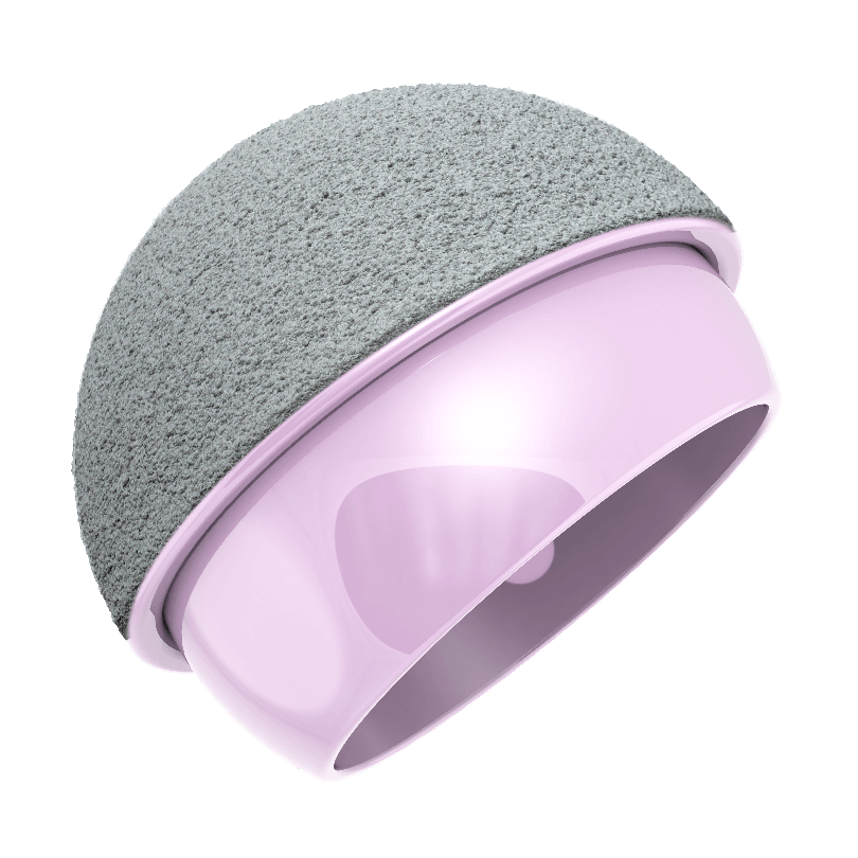
Instead of removing the ball of the hip, resurfacing reshapes it and caps it with a smooth metal or ceramic surface, keeping more of your own bone. It suits younger, active patients who want a hip that feels close to their own.
Approach
Posterior, preserving the hip muscles
Weight bearing
Usually full weight the next day
Hospital stay
Usually 1–2 days
Impact sport
Avoid for the first 3 months

Who it can help

Resurfacing is generally offered to younger, active patients with osteoarthritis, who benefit most from its natural feel and resistance to dislocation. Stephen will discuss whether it suits you.

Active men or women with osteoarthritis

The group with the best results

Older patients

Weaker bone can raise the risk, so a replacement may suit better

Finding the cause

What happens

Clinic assessment

Stephen examines your hip, reviews your X-rays and discusses whether resurfacing or a replacement suits you better.

Pre-assessment

A check of your general health shortly before the operation.

Your operation

The socket is lined with a metal or ceramic shell, and the ball is reshaped and capped with a matching surface fixed with cement. The thigh bone is not hollowed out for a stem.

Up the next day

Most people put full weight on the leg the day after surgery and go home within one to two days.

Your recovery

Many people feel they recover faster in the first weeks than after a standard replacement, and say the hip feels more natural. By a year, function is probably similar to a modern hip replacement.
Next day
Walking with full weight on the leg.
Days 1–2
Home from hospital.
First 6 weeks
Retain crutches as a ‘reminder’ to prevent overactivity and reduce the risk of fracture.
First 3 months
Avoid impact activities while the bone strengthens, to protect the femoral neck.

Risks

Resurfacing has a slightly higher early failure rate than a standard replacement (1-2%), mostly in the first year. If it fails, it can be converted more easily to a hip replacement.

Common questions

Why two materials?

Metal resurfacing is long established and with the Adept, has excellent long term results beyond 20 years. However any metal resurfacing can do badly in female patients (small head size, shallow socket) and are restricted in these patients. Hence the ceramic version which performs at least as well in women and men, and in fact is suitable for either.

Additional risks?

These are few and rare. There is a 1% chance of the bone under the cap ‘crumbling’ – AVN- and this is commonest about 6 years after surgery. It is a feature of the way the body is made and we would change to a hip replacement if it happens. 1% lifetime risk. Fracture below the head can occur if activities are too vigorous too early. You will be asked to use crutches for 6 weeks post operatively and avoid impact exercise for 3 months. Metal particle reaction can occur with the Adept implant. The risk is around 0.5% at 25 years.
Bristol Hip Surgeon
Stephen Eastaugh-Waring, Consultant Hip Surgeon
GMC Number 3591583
Appointments
Phone: 0117 933 9987
Email: sally.payne@soc-bristol.co.uk
  • Cookie Policy (UK)
  • Privacy policy
  • Terms & Conditions
  • Cookie Policy (UK)
  • Privacy policy
  • Terms & Conditions
The information on this website is general and not a substitute for advice about your own condition.
© 2026 Bristol Hip Surgeon · Site by Kinetic Pulse
Manage Consent
To provide the best experiences, we use technologies like cookies to store and/or access device information. Consenting to these technologies will allow us to process data such as browsing behaviour or unique IDs on this site. Not consenting or withdrawing consent, may adversely affect certain features and functions.
Functional Always active
The technical storage or access is strictly necessary for the legitimate purpose of enabling the use of a specific service explicitly requested by the subscriber or user, or for the sole purpose of carrying out the transmission of a communication over an electronic communications network.
Preferences
The technical storage or access is necessary for the legitimate purpose of storing preferences that are not requested by the subscriber or user.
Statistics
The technical storage or access that is used exclusively for statistical purposes. The technical storage or access that is used exclusively for anonymous statistical purposes. Without a subpoena, voluntary compliance on the part of your Internet Service Provider, or additional records from a third party, information stored or retrieved for this purpose alone cannot usually be used to identify you.
Marketing
The technical storage or access is required to create user profiles to send advertising, or to track the user on a website or across several websites for similar marketing purposes.

  • Manage options
  • Manage services
  • Manage {vendor_count} vendors
  • Read more about these purposes
View preferences
  • {title}
  • {title}
  • {title}